Guardians of nations, peoples, and earthly rulers, directing temporal order toward the divine good.
Principalities
The Principalities, also called Rulers or Princedoms, are the seventh-ranked order of angels in Christian angelology and the first choir of the third and lowest triad, marking the point where the hierarchy turns fully outward from the divine presence toward direct engagement with human affairs. Traditionally understood as guardians of nations, peoples, and institutions — including the Church itself — the Principalities preside over the lower choirs of Archangels and Angels and are credited with guiding earthly rulers toward the fulfillment of divine purpose. As with the Powers directly above them, the Principalities' identity is complicated by a scriptural vocabulary that just as often uses their name for hostile spiritual forces as for loyal ones.
Etymology
The name comes from the Latin principatus (plural principatūs, "rule" or "headship"), translating the Greek archai, plural of archē ("beginning," "rule," or "first place"), a term Paul the Apostle uses in Ephesians 3:10 (Powers and Principalities — Wikipedia).
History
Paul's letters name archai alongside exousiai ("powers") and other terms of authority in Ephesians 1:21, Ephesians 3:10, and Colossians 1:16, generally without describing their nature or number. Isidore of Seville's Etymologies (7th century) (Etymologiae — Wikipedia) describes the Principalities as angels who guide and protect nations and groups of peoples, as well as institutions such as the Church, presiding over the bands of lower angels and charging them with carrying out the divine ministry. Pseudo-Dionysius the Areopagite placed the order first in the third and lowest triad in The Celestial Hierarchy (5th–6th century CE) (De Coelesti Hierarchia — CCEL; Dionysius the Pseudo-Areopagite — New Advent), and Thomas Aquinas, in the Summa Theologica (1265–1274) (Summa Theologica I, Q.108 — New Advent), likewise assigned the Principalities oversight of large human groupings — nations, dioceses, and other collective bodies — exercising influence over the earthly rulers through whom divine will was thought to be carried out.
The clearest biblical episode associated with this concept, though it never uses the word "principality" directly, is the prophet Daniel's vision of a heavenly messenger delayed three weeks by "the prince of the kingdom of Persia," resolved only when the archangel Michael arrives to assist:
> "The prince of the kingdom of Persia withstood me twenty-one days; and behold, Michael, one of the chief princes, came to help me." (Daniel 10:13; Daniel 10:13 Commentaries — BibleHub)
Commentators have long read the "prince of Persia" and a similarly named "prince of Greece" mentioned later in the same chapter (Daniel 10:20) as territorial spirits assigned to specific nations, set against Michael's own guardianship of Israel — a passage frequently cited as the closest scriptural precedent for the idea of national guardian spirits, even though it predates and does not use the technical term "principality" found in Paul's letters.
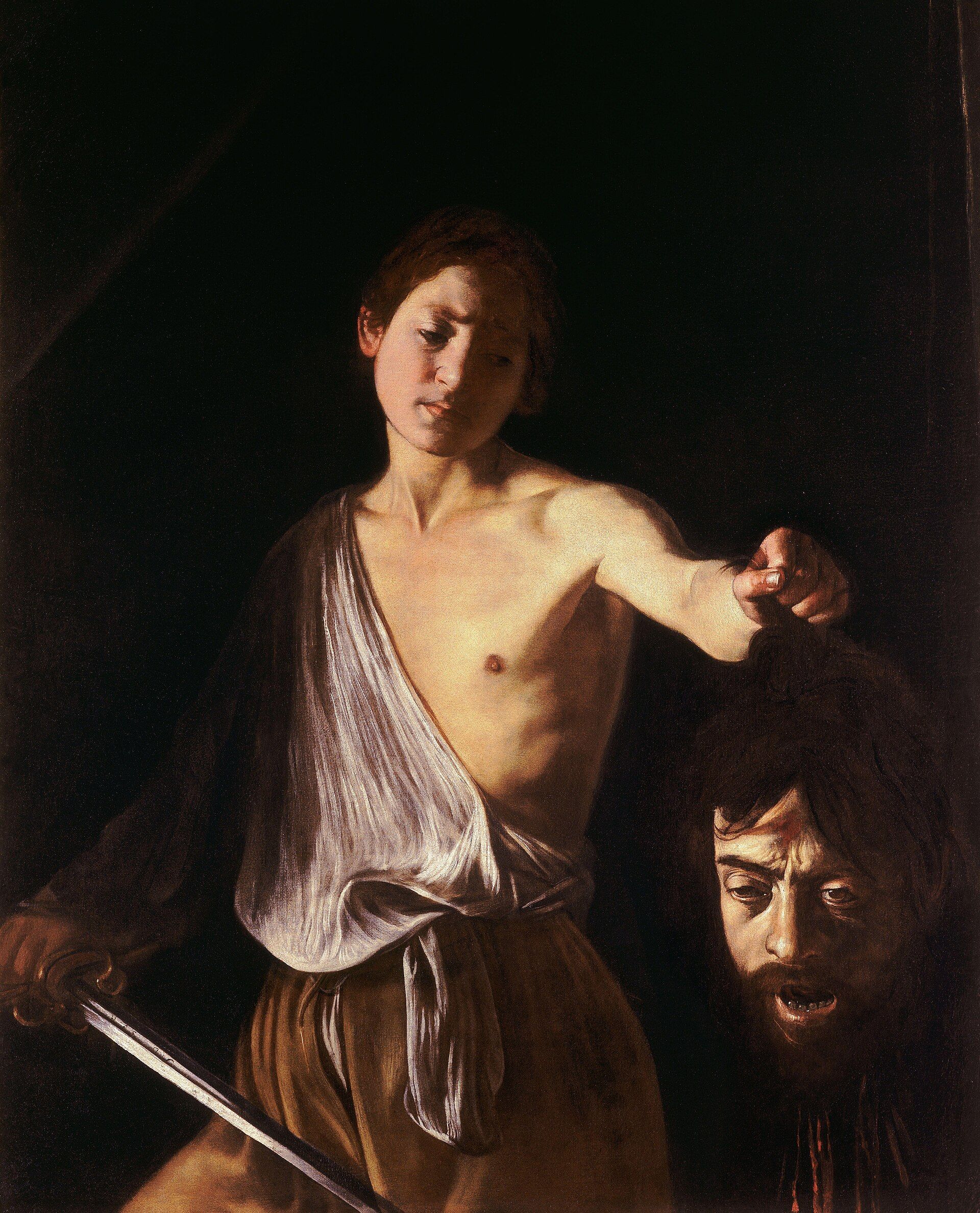
fig-principalities-david: Caravaggio, David with the Head of Goliath, 1609–1610 (Galleria Borghese) — via [Wikimedia Commons](<https://commons.wikimedia.org/wiki/File:David_with_the_Head_of_Goliath-Caravaggio_(1610).jpg>) (public domain).
Guardians who are not always loyal
Paul's usage leaves the moral status of the archai genuinely ambiguous, and this ambiguity is more pronounced for the Principalities than for almost any other choir. In Ephesians 3:10, Paul describes the church revealing God's wisdom to "the principalities and powers in the heavenly places" in a context that reads as neutral or even receptive; in Ephesians 6:12, writing in the same letter, he lists "principalities" among the forces believers wrestle against, alongside "the rulers of the darkness of this world." The theologian David Bentley Hart has described the powers and principalities collectively as "elemental guardians of the nations" appointed as wardens of the earth who "frequently forget their roles and resist the sway of God" — not straightforwardly evil, in this reading, but morally exposed custodians who can fail at the task they were given. Daniel's "prince of Persia" is widely read in this light: a spiritual guardian of a specific kingdom whose loyalties, unlike Michael's, run against rather than with the purposes of God. The Principalities are, in this sense, less a settled category of good angels than a rank whose entire biblical basis keeps open the possibility that a given "ruler" assigned to a nation might be doing its job badly, or not for God at all.

fig-principalities-venus: Venus (Mariner 10, 1974) — NASA, via Wikimedia Commons (public domain).
Related characters
| Entity | Relationship |
|---|---|
| Powers | Third-ranked choir of the second triad, preceding the Principalities |
| Archangels | Second-ranked choir of the third triad, following the Principalities |
| Archangel Michael | In Daniel's vision, the guardian "prince" of Israel who intervenes against the hostile prince of Persia (Daniel 10:13) |
| Daniel | Prophet whose vision supplies the closest biblical precedent for national guardian spirits (Daniel 10:13) |
Sources
- Powers and Principalities — Wikipedia
- Etymologiae — Wikipedia
- De Coelesti Hierarchia — CCEL
- Dionysius the Pseudo-Areopagite — New Advent
- Summa Theologica I, Q.108 — New Advent
- Ephesians 1:21 — BibleHub
- Ephesians 3:10 — BibleHub
- Ephesians 6:12 — BibleHub
- Colossians 1:16 — BibleHub
- Daniel 10:13 — Sefaria
- Daniel 10:20 — Sefaria
- Daniel 10:13 Commentaries — BibleHub
- 7 Verses about Principalities Angels — Catholic Ace
- Chapter Four: The Celestial Hierarchy — My Catholic Life!
Sources: Rom 8:38 · DCH IX