Workers of signs and cosmic marvels, pouring grace and valor over the created order and the movements of the heavens.
Virtues
The Virtues, also called Strongholds, are the fifth-ranked order of angels in Christian angelology, occupying the middle position of the second triad between the Dominions and the Powers. Their name is tied etymologically to divine might and miracle-working, and tradition credits them with channeling God's power directly into the natural world — governing the movement of the seasons and heavenly bodies, working miracles on earth, and granting courage, grace, and valor to human beings.
Etymology
The name derives from the Greek dynamis (plural dynameis), meaning "power" or "might," a word that in the New Testament also carries the specific sense of miraculous or wonder-working power (G1411 dynamis — Blue Letter Bible); the Latin virtus, from which the English name is drawn, likewise combines the senses of "strength" and "excellence" (Christian Angelic Hierarchy — Religion Wiki).
History
Like the Dominions and Powers around them, the Virtues rest on a sparse scriptural foundation: Paul the Apostle lists dynameis among the ranks of spiritual authority in Ephesians 1:21, and the term recurs in a similar sense in 1 Peter 3:22, without either passage describing the order's appearance or activity in any detail. The Greek word itself, however, carries far more weight elsewhere in the New Testament, where it is used repeatedly for the miracle-working power of Jesus and the apostles — the same root behind the Gospel accounts of "power" going out from Christ to heal the sick (Luke 6:19). This double sense, of an angelic rank and a general word for divine miraculous power, shaped how later tradition came to understand the order's function.
Pseudo-Dionysius the Areopagite ranked the Virtues fifth overall and second within the second triad in The Celestial Hierarchy (5th–6th century CE) (De Coelesti Hierarchia — CCEL; Dionysius the Pseudo-Areopagite — New Advent), assigning them the task of carrying out the directives passed down from the Dominions above them (Summa Theologica I, Q.108 — New Advent). Christian tradition subsequently credited the Virtues specifically with executing miracles on earth and overseeing the order of nature — the seasons, the elements, and the motions of the heavens — while also granting believers courage, grace, and valor in the face of hardship. The apocryphal Life of Adam and Eve (Life of Adam and Eve — Wikipedia) describes two virtues accompanying the archangel Michael to encourage Eve during the birth of her first child. In later Christian interpretation, the two unnamed "men in white" who address the disciples immediately after Christ's ascension (Acts 1:10–11) have sometimes been identified as Virtues, on the reasoning that an event demonstrating God's power over nature and death was fittingly attended by the angelic order most closely associated with power itself.
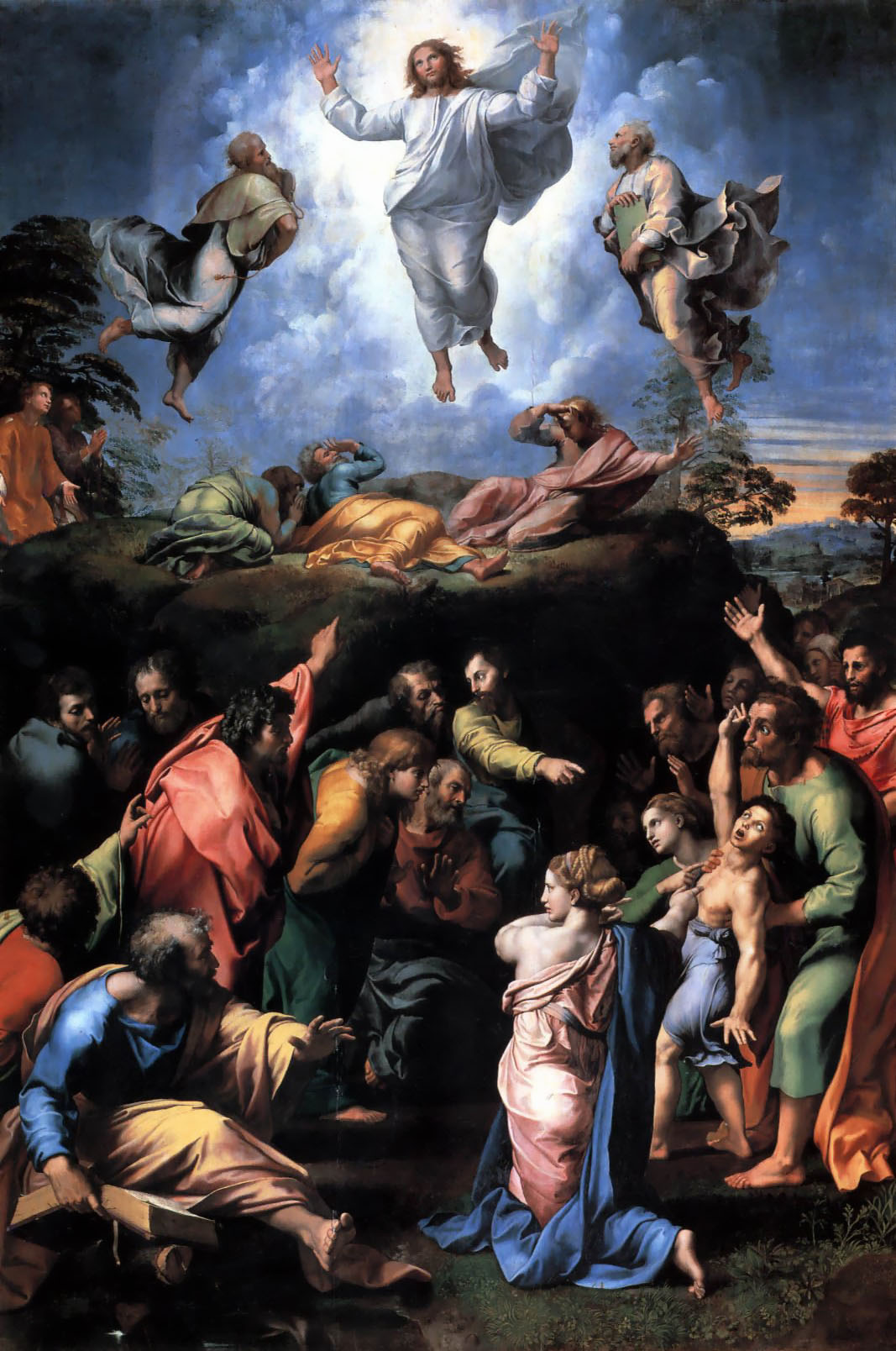
fig-virtues-transfiguration: Raphael, Transfiguration, 1516–1520 (Pinacoteca Vaticana) — via Wikimedia Commons (public domain).
An order defined by a double meaning
More than any other choir, the Virtues illustrate how the Dionysian hierarchy grew out of ordinary vocabulary rather than distinct visionary appearances. Dynamis is one of the most common words in the New Testament, used well over a hundred times for everything from Christ's healing power to the "mighty works" of the apostles; only a handful of those uses plausibly refer to a class of being at all; most are as flexible as the English words "power" or "might." The angelic order of Virtues is, in effect, the personification of a word the New Testament writers mostly used as an abstract noun — which is also why the folk tradition surrounding the Virtues (governing seasons, granting valor to martyrs, performing miracles) draws so heavily on inference from what "dynamis" does elsewhere in scripture, rather than from any passage that describes the Virtues as beings in their own right.
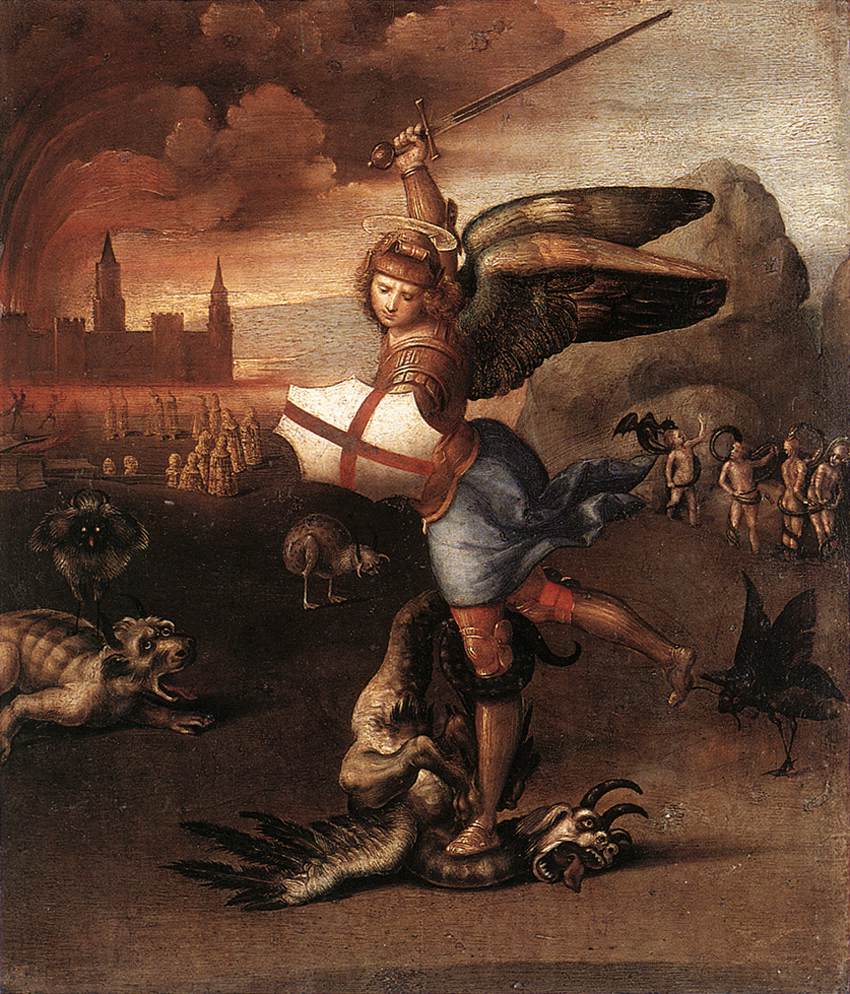
fig-virtues-michael: Raphael, St Michael Vanquishing Satan (Louvre) — the same portrait used for Michael; via Wikimedia Commons (public domain).
Related characters
| Entity | Relationship |
|---|---|
| Dominions | First-ranked choir of the second triad; the Virtues carry out the directives the Dominions pass down |
| Powers | Third-ranked choir of the second triad, working alongside the Virtues to maintain cosmic order |
| Archangel Michael | Traditionally accompanied by two Virtues while encouraging Eve during childbirth, according to the apocryphal Life of Adam and Eve |
Sources
- G1411 dynamis — Blue Letter Bible
- The Nine Choirs of Angels — Catholic Online
- Virtues — Occult World
- Christian Angelic Hierarchy — Religion Wiki
- Life of Adam and Eve — Wikipedia
- De Coelesti Hierarchia — CCEL
- Dionysius the Pseudo-Areopagite — New Advent
- Summa Theologica I, Q.108 — New Advent
- Ephesians 1:21 — BibleHub
- 1 Peter 3:22 — BibleHub
- Luke 6:19 — BibleHub
- Acts 1:10–11 — BibleHub
Sources: Eph 1:21 · DCH VIII