Warriors against the hostile powers of darkness, restraining evil spirits and ordering the struggle for human salvation.
Powers
The Powers, also called Authorities, are the sixth-ranked order of angels in Christian angelology, closing out the second triad below the Dominions and Virtues. Cast as warrior angels rather than administrators or miracle-workers, the Powers are traditionally charged with defending the created order against demonic incursion — a role that exists precisely because the same Greek vocabulary used to name this choir is, elsewhere in the New Testament, applied to the very forces it is said to fight.
Etymology
The name derives from the Latin potestas (plural potestates, "power" or "authority"), translating the Greek exousiai, plural of exousia, a term Paul the Apostle uses in Ephesians 1:21 among the ranks of spiritual authority subject to Christ (Archdemon — Wikipedia).
History
Paul lists exousiai among the created spiritual powers in Ephesians 1:21 and Colossians 1:16, again without describing their form or number. Pseudo-Dionysius the Areopagite placed the Powers third and last in the second triad in The Celestial Hierarchy (5th–6th century CE) (De Coelesti Hierarchia — CCEL; Dionysius the Pseudo-Areopagite — New Advent), and Thomas Aquinas incorporated the same ranking into the Summa Theologica (1265–1274) (Summa Theologica I, Q.108 — New Advent). Within this scheme, tradition assigned the Powers a specifically martial role: they oppose evil spirits that seek to work through the physical universe, defend the boundary between heaven and earth, and are sometimes credited as the bearers of conscience and the keepers of history.
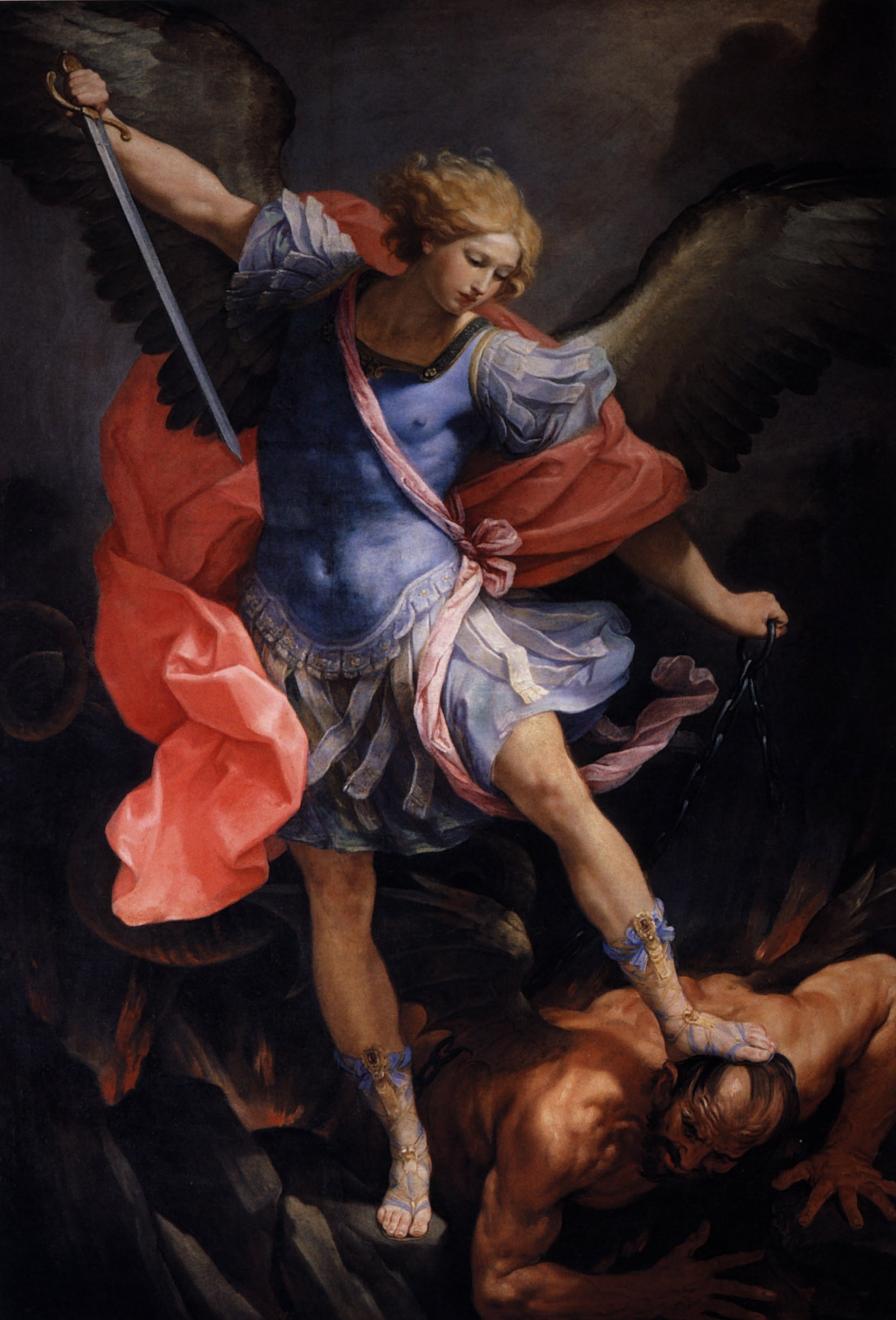
fig-powers-reni: Guido Reni, Archangel Michael Defeats Satan, 1636 — via Wikimedia Commons (public domain).
Angels named after their own enemy's vocabulary
No choir in the Dionysian system carries a more direct tension between its name and its supposed function than the Powers. The same Greek word, exousia, that names this order of loyal angels is used by Paul just five chapters later, in the same letter, to describe what believers struggle against: "we do not wrestle against flesh and blood, but against the rulers, against the powers [_exousiai_], against the world forces of this darkness, against the spiritual forces of wickedness in the heavenly places" (Ephesians 6:12; Ephesians 6:12 — StudyLight). Paul never explicitly distinguishes a loyal, heavenly exousiai from the hostile one he warns the Ephesians about; the split between "Powers" as an angelic choir and "powers" as a class of demonic opposition is a later theological resolution, imposed to make sense of vocabulary Paul used more loosely for cosmic authority in general, good or evil. Pseudo-Dionysius's solution was to give the good Powers the specific job of guarding creation against the interference of the very forces that share their name. A related and more colorful tradition, without any direct scriptural basis, holds that Satan himself was the highest of the Powers before his fall — a claim that, whatever its truth, at least captures how thoroughly this choir's identity is bound up with the adversarial beings it was defined to oppose.
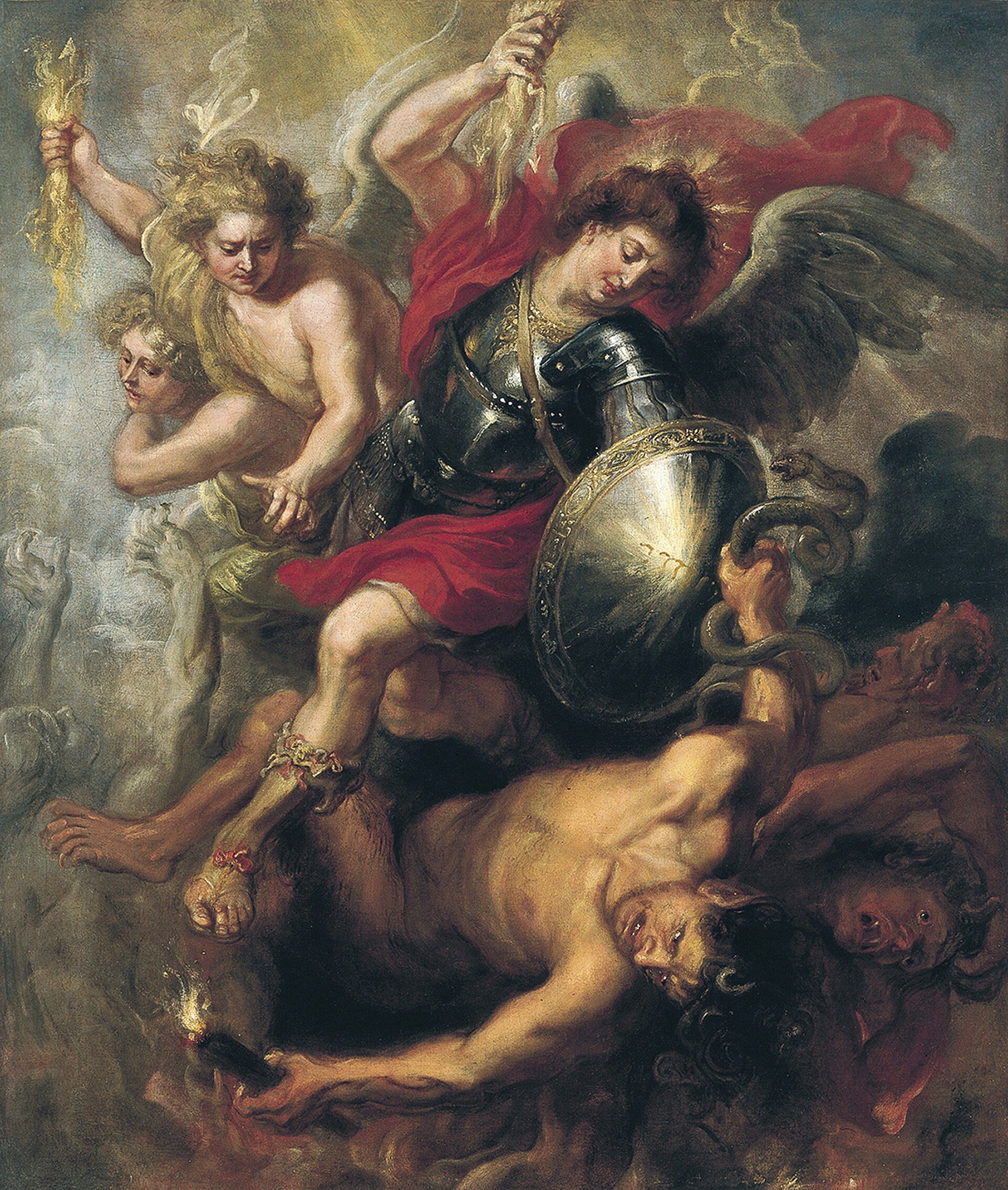
fig-powers-rubens: Workshop of Peter Paul Rubens, Saint Michael Expelling Lucifer and the Rebellious Angels, 1622 (Thyssen-Bornemisza) — via Wikimedia Commons (public domain).
Related characters
| Entity | Relationship |
|---|---|
| Virtues | Second-ranked choir of the second triad, preceding the Powers |
| Principalities | First-ranked choir of the third triad, following the Powers |
| Satan / Lucifer | In one popular but non-canonical tradition, the highest-ranking Power before his fall |
Sources
- Powers — Angelology Wiki
- Powers: Biblical Basis, Spiritual Warfare, and the Hierarchy — Know the Angels
- Ephesians 6:12 — StudyLight
- Archdemon — Wikipedia
- De Coelesti Hierarchia — CCEL
- Dionysius the Pseudo-Areopagite — New Advent
- Summa Theologica I, Q.108 — New Advent
- Ephesians 1:21 — BibleHub
- Colossians 1:16 — BibleHub
- Ephesians 6:12 — BibleHub
Sources: Eph 6:12 · DCH VIII